Hire a Dedicated AI and Data Science Team for Product Development
Extend your product organization with a coordinated team of AI developers, data scientists, machine learning and computer vision specialists, supported by full-stack web and mobile engineers. iTechOza provides dedicated capability for companies that need sustained delivery rather than a one-time experiment.
The team works within a defined product roadmap, communication rhythm and ownership model, with project management, technical review and access to the wider iTechOza engineering organization when the solution requires backend, frontend, mobile, API or infrastructure support.
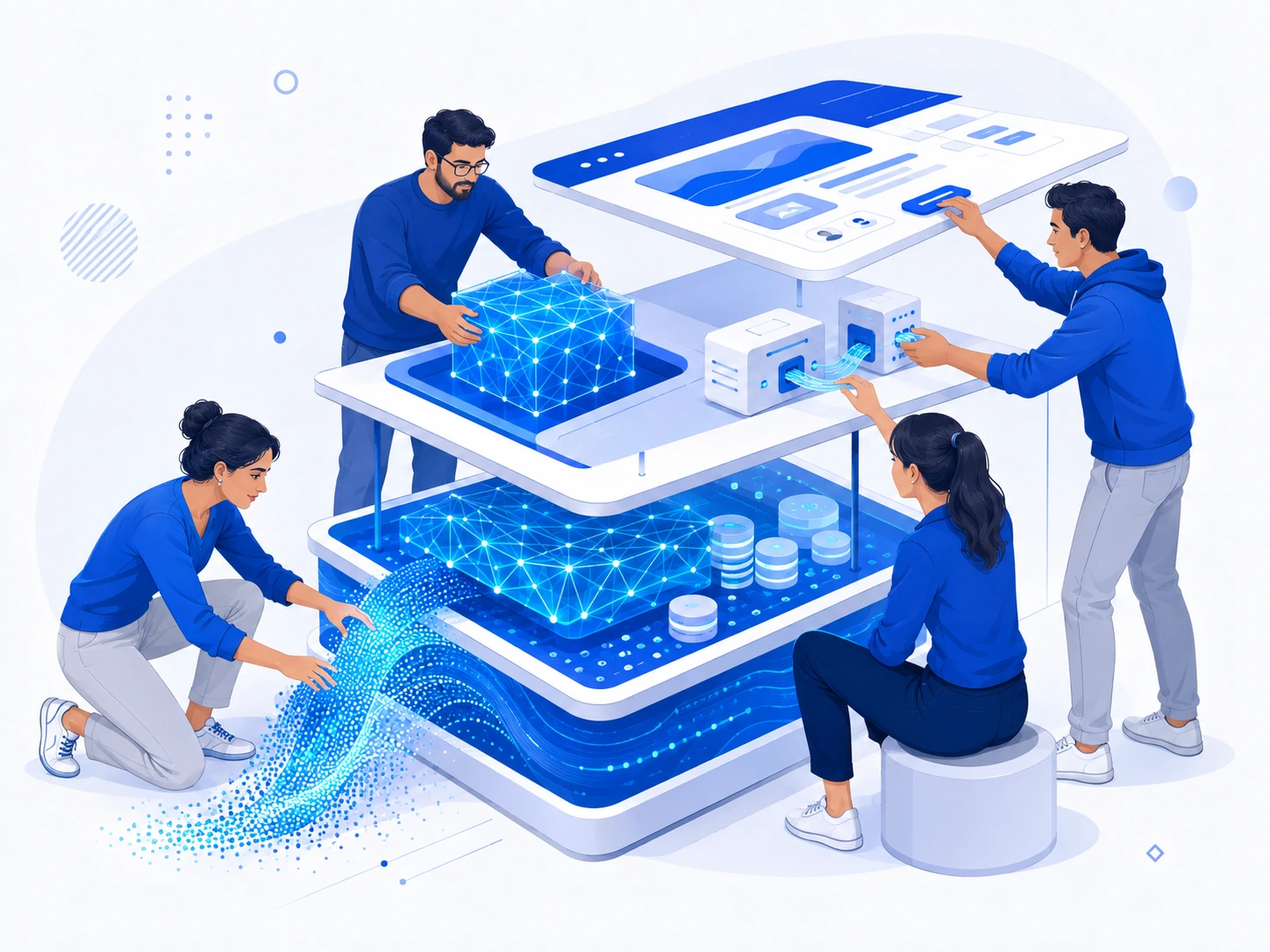
Roles and Capabilities Available to Your Team

AI and LLM Engineers
Develop generative AI, RAG, agent, prompt, evaluation and model-integration workflows inside production applications.

Data Scientists and ML Engineers
Prepare data, design experiments, develop predictive models and support deployment, monitoring and lifecycle planning.

Computer Vision Specialists
Develop and evaluate image classification, detection, OCR, inspection and visual data pipelines.

NLP and Knowledge Engineers
Build classification, extraction, semantic search, retrieval and language-data workflows.

Full-Stack Product Engineers
Deliver frontend, backend, mobile, APIs, databases, authentication, admin systems and integrations around AI capabilities.

Project and Technical Leadership
Provide roadmap planning, delivery coordination, risk tracking, review, acceptance criteria and stakeholder communication.
When a Dedicated AI Team Is the Right Mode

You Have an Ongoing AI Product Roadmap
Maintain continuity across discovery, experiments, features, production hardening and improvement.

Your Internal Team Needs Specialist Depth
Add machine learning, computer vision, NLP or agent expertise without recruiting every role permanently.

A SaaS Platform Is Adding Several AI Features
Coordinate common data, model, evaluation, usage and architecture foundations across the roadmap.

You Need Model and Product Work Together
Combine data science with the full-stack engineering required to make capabilities usable.
An Agency Needs a Delivery Partner
Extend client delivery under a defined communication, confidentiality and responsibility model.
A Prototype Needs Long-Term Ownership
Move from one-off implementation to a team responsible for stabilization, roadmap and operations.
Industry and Product Applications
The technical pattern should be adapted to the industry's data, workflow, risk and operating environment. Relevant applications can include:
AI-Native SaaS
Build and improve a product roadmap requiring models, data, integrations and multi-tenant application engineering.
Enterprise Product Teams
Add a coordinated extension team around a defined AI initiative and internal governance structure.

Computer Vision Products
Combine dataset, model and MLOps work with backend, interface and operational workflows.
Knowledge and Document Platforms
Bring NLP, retrieval, document processing and full-stack delivery into one team.
Modernization Programmes
Stabilize prototypes and move AI features toward secure, monitored production ownership.
Have a Web Project in Mind?
Whether you have detailed requirements, an early product idea or an existing application that needs to evolve, start by telling us what you are trying to achieve.
Tell UsHow We Set Up a Dedicated AI Team
01
Roadmap and Capability Review
Understand product goals, current architecture, delivery stage, specialist gaps and expected working model.
02
Team Composition
Recommend roles, seniority, allocation and supporting expertise based on actual near-term work.
03
Technical and Delivery Onboarding
Agree access, environments, communication, ceremonies, documentation, security and definition of done.
04
Initial Delivery Plan
Create milestones, dependencies, risks, evaluation criteria and ownership for the first delivery cycle.
05

Ongoing Execution and Review
Deliver in visible iterations with demos, code review, model findings, QA and stakeholder updates.
06

Scale or Adjust
Change team composition as the roadmap moves between research, product development, deployment and support.
Technical Architecture and Delivery Considerations
The final architecture depends on the product, data, volume, security and integration requirements. A
production implementation will normally consider the following layers:
Cross-Functional Team Design
Combine AI or data-science specialists with full-stack, QA, project and technical leadership appropriate to the roadmap.
Shared Delivery Backlog
Translate product outcomes into prioritized discovery, data, experiment, engineering and release work.
Engineering and MLOps Standards
Use agreed repositories, reviews, environments, documentation, testing and deployment controls.
Decision and Governance Rhythm
Make model, data, architecture, scope and risk decisions visible to client stakeholders.
Capacity and Skill Planning
Adjust specialist involvement as milestones move between research, build, integration and operations.
Ready to Build the Right Solution?
Whether you need a new application, additional functionality or support for an existing product, we can help you plan the right development path for your goals.
Contact UsHow Project Success Can Be Measured
Success measures should be agreed during discovery and tied to the intended user outcome. Appropriate measures may include:

Roadmap throughput
Completed outcomes are measured against agreed milestones rather than hours occupied.
Delivery predictability
Risks, dependencies and forecast changes are communicated before they become missed commitments.
Quality and acceptance
Features, models and workflows meet defined technical and business acceptance criteria.

Knowledge continuity
Architecture, experiments, decisions and operations are documented beyond individual team members.
Capability fit
The team composition evolves with the roadmap without unnecessary idle specialist roles.
Have a Web Project in Mind?
Flexible Engagement Options

Dedicated Specialist
Best for adding one focused AI, ML or computer vision capability to an established delivery team.
AI Product Pod
Best for a cross-functional unit combining AI or data science with full-stack product development.
Managed AI Delivery Team
Best for clients who need roadmap execution, project management, specialist depth and broader engineering ownership.