API Integration Fixes & Troubleshooting Services
A failed API can break login, payments, automation, AI features and the workflows your users depend on. Our developers diagnose broken REST APIs, webhooks, OAuth, OpenAI, Claude, Gemini, Stripe and other third-party integrations, identify the root cause and implement a stable fix.
Most isolated, reproducible API issues can be diagnosed and fixed within one business day after we receive the required access and confirm the scope. Multi-system failures, provider migrations, security incidents or incomplete legacy integrations receive a clear estimate before work begins.
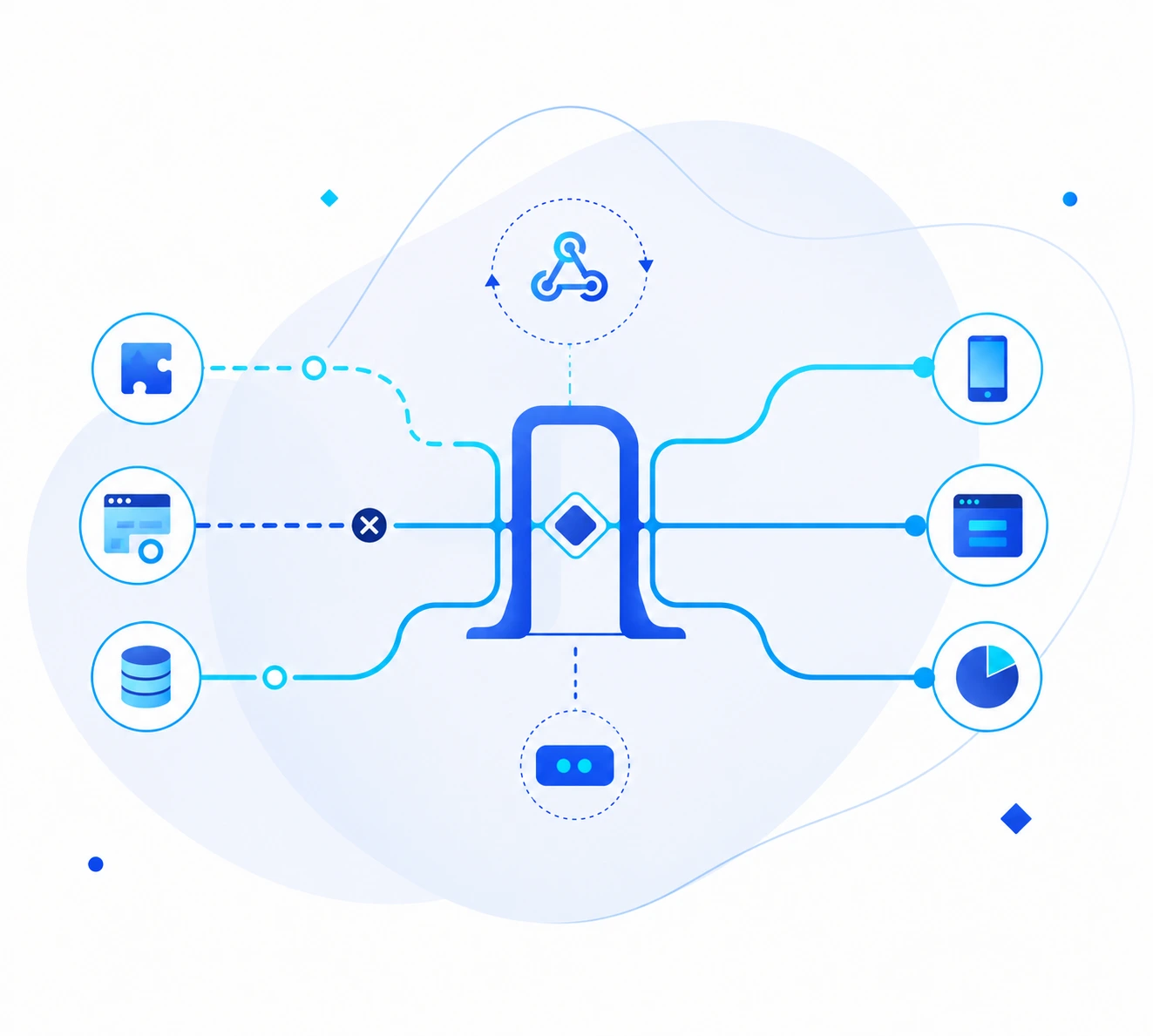
One Failed API Call Can Break an Entire Business Workflow
The visible error is often only the last step in a longer failure. A 401 response may begin with an expired refresh token. A duplicate order may come from a retried webhook without idempotency. An AI feature may appear frozen because streaming, timeouts or rate-limit handling was never completed. We trace the full request and data flow before deciding what to change.

Authentication Failures Block Access
Expired tokens, incorrect scopes, invalid signatures or permission mistakes can stop an otherwise healthy integration.

Payload Mismatches Corrupt the Workflow
Changed fields, wrong data types, missing headers or unexpected response formats can break data mapping and downstream actions.

Webhooks Fail Quietly
Invalid signatures, slow endpoints, duplicate events or missing retries can leave orders, subscriptions and records out of sync.

Temporary Retries Create Larger Incidents
Unbounded retries can duplicate actions, increase provider costs and hide the underlying rate-limit, timeout or configuration problem.
API Errors and Integration Problems We Fix
We troubleshoot the application code, API contract, authentication, network path, provider response, asynchronous events and production configuration involved in the failed workflow.

Authentication and Authorization Errors
We diagnose 401, 403 and access-control problems across API keys, OAuth, JWT, sessions, scopes, roles and service credentials.
- Expired or invalid tokens
- Refresh-token failures
- Incorrect OAuth redirect or scope configuration
- Signature and timestamp problems
- Role, tenant or object-level access mistakes

Request, Response and Data-Mapping Errors
We repair invalid requests and broken data flows caused by contract, header, schema or format mismatches.
- 400, 404, 405, 409, 415 and validation errors
- Missing or incorrect headers
- JSON, form or multipart payload problems
- Changed or undocumented response fields
- Null, type and timezone mapping errors
CORS, Network, SSL and Timeout Issues
We trace browser, server and provider connectivity problems that make an API work in one environment but fail in another.
- CORS and preflight failures
- DNS, TLS and certificate errors
- Proxy and firewall configuration
- Connection and read timeouts
- Environment-specific endpoint or secret problems
Rate Limits, Retries and Reliability
We fix integrations that fail under real usage or create duplicate and costly requests.
- 429 rate-limit responses
- Backoff and bounded retry handling
- Idempotency for create/payment actions
- Concurrency and queue issues
- Caching, batching and request-volume improvements

Webhook and Callback Troubleshooting
We repair webhook workflows that are rejected, delayed, duplicated or silently dropped.
- Signature-verification failures
- Incorrect callback URLs
- Slow acknowledgement and timeout
- Duplicate, out-of-order or replayed events
- Missing event logs and retry handling

Payment, CRM and Communication Integrations
We troubleshoot high-impact workflows across payment gateways, subscriptions, email, SMS, WhatsApp, CRM, analytics and other business platforms.
- Checkout and payment confirmation
- Subscription and refund events
- CRM sync and duplicate records
- Email/SMS delivery triggers
- Third-party version and permission changes

API Version, SDK and Provider Migration Fixes
We update integrations affected by deprecated endpoints, SDK changes, model changes or provider contract updates.
- Endpoint and API-version migration
- SDK upgrade conflicts
- Changed authentication or webhook formats
- Legacy response parsing
- Phased compatibility and rollout fixes
How We Diagnose and Fix a Broken API Integration
01
Send the failure details
Share the affected workflow, expected behaviour, error message or status, when it began and whether production users or revenue are affected.
02
Reproduce the issue safely
We prefer a local or staging environment and test credentials. We capture the request, response and relevant application or webhook logs without placing secrets in tickets or analytics.
03

Trace the full integration
We inspect authentication, endpoint, headers, payload, response parsing, application state, asynchronous events, retries and provider constraints.
04
Confirm root cause and scope
We explain what is failing, what can be fixed in the application, any provider dependency, the proposed change, turnaround and estimate.
05

Implement and test
We make the approved change, test the successful path and agreed failure cases, and check related behaviour for obvious regressions.
06

Deploy and hand over
We support the approved release, document the repair and recommend larger modernization only when the current integration genuinely needs it.
API Troubleshooting Across the Full Application Workflow
9+ Years of Application Development
Our experience spans SaaS, web, mobile, MERN, Laravel, PHP, WordPress, databases, APIs and third-party platforms.
Diagnosis Before Patching
We trace the request and data flow so the repair addresses the root cause rather than only hiding the visible error.
AI and Traditional API Coverage
We can troubleshoot standard REST/webhook integrations and modern OpenAI, Claude, Gemini or multi-model workflows.
Production-Safe Working Process
We prefer staging, limited access, version control, focused changes and validation before release.
Clear Responsibility and Communication
We distinguish application bugs from provider outages, account limits and external platform restrictions.
Ready to Build the Right Solution?
Whether you need a new application, additional functionality or support for an existing product, we can help you plan the right development path for your goals.
Contact UsWho This API Integration Fixing Service Is For

SaaS Founders and Product Owners
Restore a broken payment, login, AI or automation workflow without pausing the broader roadmap.

Agencies and Development Partners
Get white-label diagnostic and repair support for a client integration that needs specialist attention.
Businesses With Revenue-Critical Integrations
Resolve failures affecting checkout, subscriptions, CRM sync, communications or operational data.

Teams Inheriting an Existing Application
Understand and stabilize undocumented integrations built by a previous vendor, freelancer or AI coding tool.

Teams Facing Provider or SDK Changes
Migrate deprecated endpoints or changed authentication and webhooks with a controlled release plan.
Have a Web Project in Mind?
Whether you have detailed requirements, an early product idea or an existing application that needs to evolve, start by telling us what you are trying to achieve.
Tell Us