Payment, Subscription & Webhook Fixing Services
Checkout failing, payments marked incorrectly, subscriptions out of sync or webhooks not reaching your application? We trace the full payment workflow across frontend, backend, provider, database and customer access to identify the root cause and deliver a controlled fix.
Most isolated, reproducible issues can be diagnosed and fixed within one business day after required access, safe test conditions and scope confirmation. Complex billing systems, data reconciliation or provider-side restrictions receive a clear estimate before development begins.
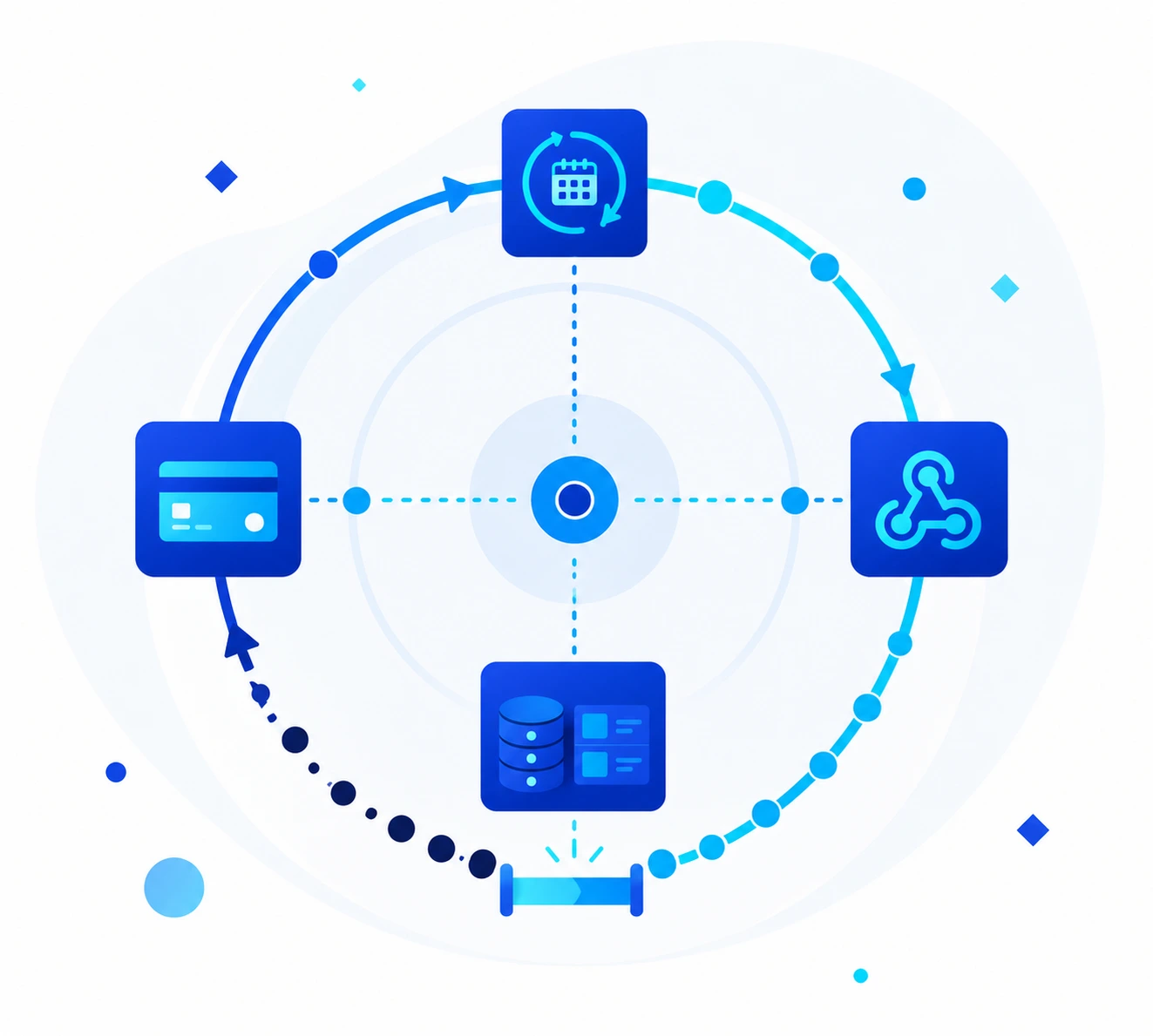
A Payment Can Succeed at the Provider and Still Fail in Your Product
Modern payment flows are asynchronous. A customer action can create a checkout session, payment attempt, invoice, subscription, webhook event, order update and access decision across several systems. If one transition is missed, repeated or processed out of order, money and application state can disagree.

Checkout Fails or Never Completes
The customer sees an error, endless loading, incorrect redirect, authentication failure or an unsupported payment state.

Payment Succeeds but the Order Is Missing
The provider records a successful payment while the application does not create the order, booking, credit or entitlement.

Subscriptions and Access Are Out of Sync
A user is charged but remains locked out, or retains access after cancellation, refund, failed renewal or expiration.

Webhooks Fail, Retry or Arrive More Than Once
Signature errors, timeouts, endpoint failures, duplicate events or event-order assumptions create inconsistent state.

Customers See Duplicate Orders or Charges
Network retries, repeated submissions or missing idempotency and deduplication logic process the same intent more than once.

Test Mode Works but Live Mode Fails
Live credentials, domains, webhook endpoints, API versions, payment methods, taxes or provider account settings differ from the test environment.
Refund or Dispute Status Is Not Reflected
The application does not update access, inventory, accounting status or customer communication when the provider state changes.

Mobile Purchases Do Not Unlock Access
Apple or Google purchase and server-notification states are not correctly verified or mapped to the user's entitlement.
Restore a Payment Workflow You Can Explain, Test and Reconcile

Find the Real Failure Point
Trace provider requests, responses, events, application logs, database records and entitlement updates across the full workflow.

Protect Against Repeated Processing
Use provider-supported idempotency, event deduplication and safe retry behavior where applicable.
Keep Billing and Access in Sync
Map payment, invoice and subscription lifecycle states to explicit product access rules.
Handle Asynchronous States
Support required actions, delayed payment methods, pending events, retries, cancellations, refunds and disputes without assuming immediate success.

Deploy With a Safer Rollback Path
Validate in approved test conditions, document acceptance checks and use controlled production changes.

See What Needs More Than a Bug Fix
Identify reconciliation, migration, architecture or provider-account work that requires a separate plan.
What We Diagnose and Fix
Checkout and Payment Failures
Restore the path from customer action to a confirmed application outcome.
- Checkout initialization and redirect errors
- Payment method, currency and amount issues
- 3DS / customer-authentication flow problems
- Capture, authorization and confirmation mistakes
- Test-mode and live-mode configuration mismatches
Subscription Lifecycle and Entitlements
Keep recurring billing state aligned with product access.
- Subscription creation and initial-payment failures
- Trial, upgrade, downgrade and proration logic
- Renewal, failed-payment and retry handling
- Pause, cancellation, expiration and reactivation
- User, team or tenant entitlement synchronization

Webhook and Server-Notification Recovery
Make asynchronous provider events secure, observable and safe to process.
- Endpoint, routing and TLS/configuration failures
- Signature verification and raw-body problems
- Timeout, retry and duplicate-event handling
- Event ordering and missing transition logic
- Apple / Google server-notification workflows
Order, Invoice and Payment-State Synchronization
Resolve disagreements between the provider and application database.
- Payment succeeded but order not created
- Invoice paid but account not upgraded
- Order paid twice or created more than once
- Pending, failed, refunded or disputed state mismatch
- Provider-to-application reconciliation tools
Refund, Cancellation and Dispute Workflows
Correct technical handling of downstream state changes.
- Full and partial refund status updates
- Access, credits or inventory reversal logic
- Cancellation timing and end-of-period access
- Dispute event handling and account flags
- Customer and administrator notification triggers
Reliability and Payment Observability
Reduce silent failures and make future incidents easier to investigate.
- Idempotency and deduplication controls
- Structured non-sensitive logs and request correlation
- Dead-letter, retry and replay procedures
- Payment-state dashboards or admin checks
- Alerting for failed events and reconciliation gaps

WooCommerce Payment Recovery
Fix payment-specific ecommerce failures while respecting plugin and provider boundaries.
- Gateway plugin conflicts and configuration
- Checkout and order-status errors
- Missing or unhealthy webhooks
- Completed payment with pending/on-hold order
- Subscription renewal and membership-access issues
Billing Version and Provider Changes
Recover integrations affected by API, SDK, plugin or provider changes.
- Deprecated endpoint or SDK behavior
- API-version and payload changes
- Webhook event-version differences
- Plugin or framework upgrade regression
- Provider migration assessment quoted separately
Have a Web Project in Mind?
Whether you have detailed requirements, an early product idea or an existing application that needs to evolve, start by telling us what you are trying to achieve.
Tell Us
Diagnostic and repair process
01
Share the business symptom
Explain what the customer did, what they expected, what actually happened and whether money, access or orders are affected.
02
Confirm the provider and workflow
Identify checkout, payment, invoice, subscription, webhook, refund, marketplace or mobile entitlement scope.
03

Arrange secure least-privilege access
Use approved repository, sandbox, provider-role and log access. Never send live secrets or cardholder data in chat or the public form.
04
Reproduce in safe conditions
Use sandbox, test mode, staging or redacted evidence before changing production whenever technically possible.
05
Trace the complete state transition
Follow identifiers across the frontend, backend, provider object, webhook, database record and access decision.
06
Confirm root cause and acceptance checks
Separate application bugs from provider configuration, account restrictions, unsupported behavior or data-repair work.
07

Implement and test the fix
Test success, failure, retry, duplicate, cancellation and other relevant states for the approved scope.
08
Deploy, monitor and hand over
Use controlled production changes, verify expected events and document remaining risks or follow-on work.
Why iTechOza
We Trace the Full Revenue Workflow
Diagnosis covers customer action, application code, provider object, asynchronous event, database state and product access rather than stopping at one API response.
Backend and Frontend Experience
Our team works across React, Node.js, Laravel, PHP, WordPress, WooCommerce, databases, mobile apps and APIs.
Sandbox-First Where Possible
Reproduction and regression checks use safe test conditions before controlled production changes whenever the provider and application permit it.
Clear Provider Boundaries
We distinguish code defects from merchant-account restrictions, issuer declines, provider availability and unsupported product behavior.
Production-Safe Change Process
Scope, acceptance checks, backups or rollback, deployment approval and post-release verification are defined before high-risk changes.
A Path From Fix to Stability
Complex systems can continue into reconciliation, architecture improvements, new integration development or ongoing maintenance under a separate scope.