Custom AI Development Services Built for Real Business Workflows
Move from an AI idea to a secure, scalable system your team and customers can actually use. iTechOza designs and develops generative AI applications, AI agents, machine learning models, computer vision systems, intelligent chatbots and workflow automation for SaaS companies, startups and growing businesses.
From strategy and proof of concept to integration, deployment and ongoing optimization, our AI specialists, data scientists and full-stack engineers work together to turn complex technology into practical business value.
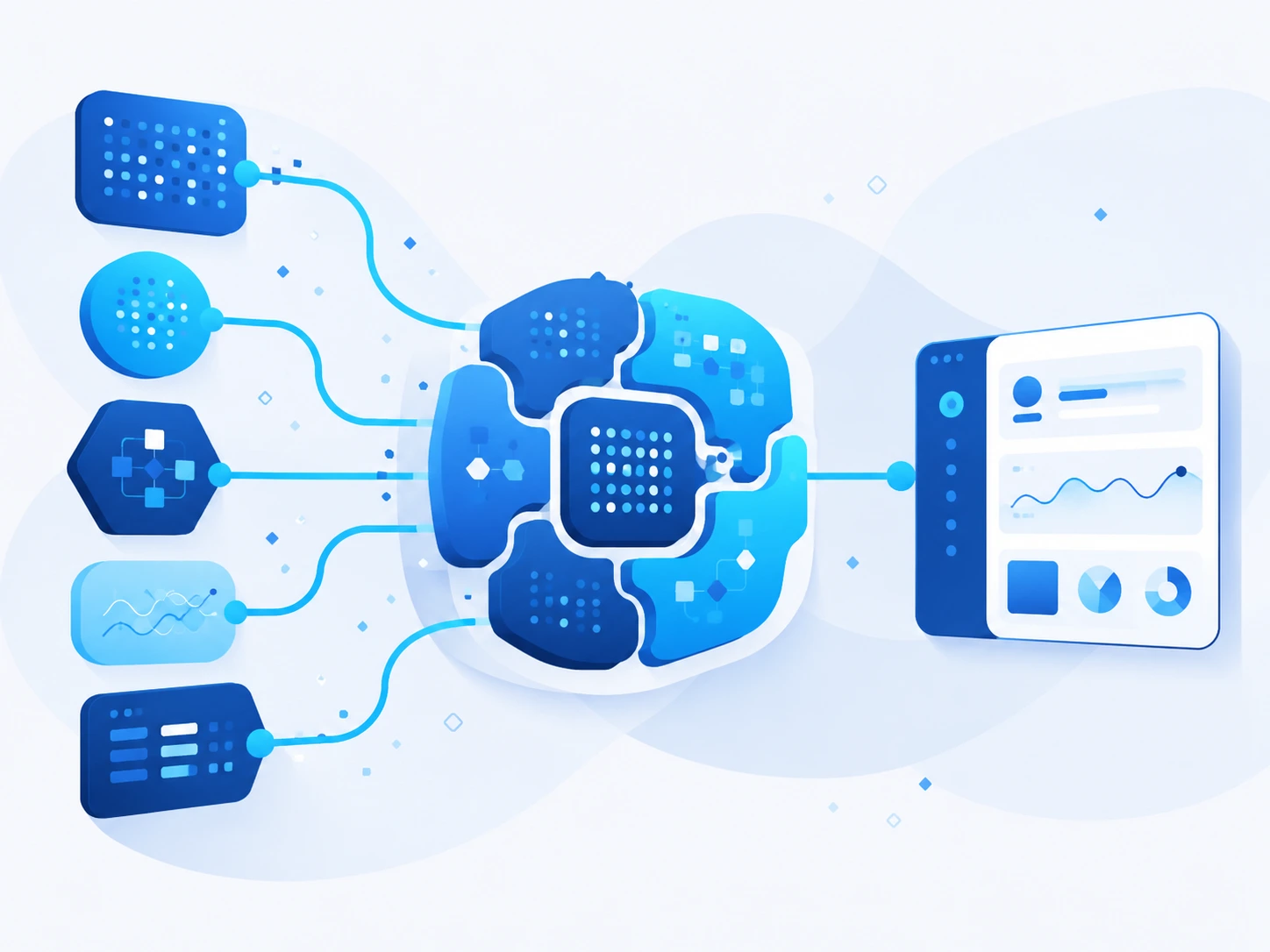
AI Should Solve a Real Business Problem - Not Become Another Experiment
Many businesses have already tested AI. The harder part is turning a promising experiment into a dependable product, workflow or decision system. That requires the right data, clear success criteria, secure integrations and engineering that works beyond a controlled demo.
We begin with the problem your business needs to solve and then choose the most suitable combination of AI models, machine learning, computer vision, automation and application architecture.

Manual Work Keeps Expanding
Your team spends valuable time copying data, routing requests, preparing reports or repeating the same decisions.

Knowledge Is Difficult to Access
Important answers are buried across PDFs, internal documents, databases and disconnected systems.

Data Is Collected but Underused
Historical business data exists, but it is not helping you predict demand, detect risk or make better decisions.

AI Prototypes Fail in Production
A proof of concept may look promising but struggle with accuracy, permissions, scale, latency, cost or real integrations.

Customers Expect Faster Experiences
Users want immediate, relevant and consistent help across products, websites, messaging channels and phone calls.
Have a Web Project in Mind?
End-to-End AI Development Services
Whether you are validating a new concept, adding intelligence to an existing product or modernizing a business workflow, we provide the strategy, data science and software engineering needed to move from idea to reliable implementation.
Generative AI Consulting & Application Development
Turn generative AI into a dependable part of your product or operations. We help identify valuable use cases, select the right models and build applications that generate, summarize, analyze and transform information within clear business rules.
Our team can develop standalone AI applications, embedded copilots, content systems and internal assistants while addressing output quality, permissions, cost, latency and maintainability from the beginning.
- Generative AI strategy and feasibility assessment
- Custom AI applications, copilots and content systems
- Model selection, prompt and context engineering
- Output evaluation, guardrails and human review
- Cost, latency and production-performance optimization

AI Agent Development
Build AI agents that do more than answer questions. We design controlled agentic systems that can interpret a request, use approved tools, retrieve information, call APIs and complete multi-step business tasks.
Every workflow is designed with explicit permissions, error handling, auditability and human approval where the risk or business decision requires it.
- Task and workflow agents for business operations
- Tool calling and secure API integrations
- Single-agent and multi-agent orchestration where justified
- Human approval, escalation and exception handling
- Agent evaluation, logging and performance monitoring
AI Chatbot & Conversational AI Development
Create conversational experiences that understand context, use trusted business information and guide people toward the right action. We build customer-facing and internal AI chatbots for support, lead qualification, onboarding, product guidance and team assistance.
Chatbots can be connected to your website, SaaS product, CRM, helpdesk, messaging channels and knowledge sources, with a clear handoff to human teams when needed.
- Website, in-product and internal AI assistants
- Customer support and lead-qualification workflows
- Knowledge-grounded responses with citations
- Multilingual conversations and channel integration
- Human handoff, analytics and conversation review

Machine Learning Development
Use historical and real-time data to recognize patterns, forecast outcomes and support better decisions. Our machine learning team develops models around the business objective, available data and level of accuracy the workflow requires.
We cover the complete lifecycle from data preparation and feature engineering to model evaluation, deployment, monitoring and retraining strategy.
- Forecasting and predictive analytics
- Recommendation and personalization systems
- Classification, scoring and prioritization models
- Anomaly, risk and fraud-pattern detection
- Model deployment, monitoring and lifecycle planning

Computer Vision Development
Transform images and video into structured information your systems can use. We develop computer vision solutions for detection, classification, recognition, measurement, inspection and visual search.
The architecture can combine custom models, established vision frameworks and cloud or edge deployment according to the required accuracy, response time, privacy and operating environment.
- Object detection, tracking and image classification
- OCR, visual data extraction and document imaging
- Quality inspection and defect detection
- Visual search, tagging and content moderation support
- Cloud, on-device and edge-deployment planning

Natural Language Processing Solutions
Help your software understand and organize human language at scale. We create NLP solutions that analyze text, identify important entities, classify content, measure sentiment and convert unstructured language into useful business data.
NLP capabilities can operate independently or strengthen chatbots, document processing, search, compliance review, customer feedback analysis and workflow automation.
- Text classification and topic detection
- Named-entity and key-information extraction
- Sentiment, intent and feedback analysis
- Summarization and multilingual processing
- Semantic search and language-based automation

RAG & Enterprise Knowledge Assistants
Give employees and customers accurate answers grounded in the information your organization trusts. We build retrieval-augmented generation systems that connect AI models with documents, databases, policies, product information and other approved knowledge sources.
The solution can include citations, role-based access, source freshness controls and evaluation workflows so users can understand where an answer came from and when human review is appropriate.
- Enterprise knowledge assistants and internal search
- Document, database and API-based retrieval pipelines
- Vector search, reranking and response grounding
- Source citations and role-aware access controls
- Retrieval quality evaluation and content-refresh workflows

Intelligent Document Processing
Reduce the manual effort required to read, classify and process business documents. We combine OCR, computer vision, NLP, machine learning and generative AI to turn PDFs, forms, invoices, applications and other unstructured files into validated, actionable data.
Document workflows can include confidence scoring, business-rule validation, exception queues, human review and direct integration with existing systems.
- Document classification and OCR-based extraction
- Field validation, normalization and confidence scoring
- Table, form and multi-page document processing
- Human review and exception-management workflows
- CRM, ERP, database and storage integration

Voice AI Agent Development
Build natural voice experiences that can understand requests, access approved information and complete useful actions. We develop voice AI agents for inbound and outbound service workflows while preserving clear escalation to a human team.
Solutions can be designed around appointment booking, lead qualification, status enquiries, reminders, internal helpdesks and other repeatable conversations where speed and consistency matter.
- AI phone reception and call-routing workflows
- Appointment booking, qualification and reminders
- Speech-to-text and text-to-speech integration
- CRM, calendar, helpdesk and business-system connectivity
- Consent, recording, human transfer and audit controls
AI Workflow Automation & System Integration
Connect AI with the software your business already uses. We design workflows that combine models, business rules, APIs and human decisions to reduce repetitive work without losing operational control.
The result is not an isolated AI feature. It is a maintainable system with permissions, failure handling, logs and measurable outcomes across the tools your team relies on.
- CRM, ERP, helpdesk, email and storage automation
- OpenAI, Gemini and suitable model-provider integrations
- Data enrichment, routing, approvals and notifications
- Custom APIs, webhooks and event-driven workflows
- Error handling, audit logs and operational monitoring
Start With the Outcome You Need
You do not need to arrive with a model or technical specification. Start with the result you want, the process that is slowing your team down or the customer experience you want to improve.
Improve Customer Support and Sales
Use AI chatbots, voice agents, knowledge retrieval and intelligent routing to answer routine questions, qualify opportunities and move complex conversations to the right person.

Automate Internal Operations
Connect AI with business rules and existing systems to process requests, prepare information, update records, route approvals and reduce repetitive administrative work.

Turn Business Knowledge Into Answers
Create secure search and knowledge assistants that retrieve information from approved documents, databases and applications with citations and access control.
Predict What Comes Next
Use machine learning to forecast demand, score opportunities, identify anomalies, personalize experiences and support faster data-informed decisions.
Understand Images, Video and Documents
Apply computer vision, OCR, NLP and document intelligence to recognize, classify, extract and validate visual or text-based information.

Launch an AI Product Faster
Validate the use case with a focused proof of concept, then build the product experience, backend architecture, model workflow and production controls as one coordinated delivery.
AI Solutions Adapted to Your Industry and Workflow
The underlying technology may be similar, but the data, risk, terminology, integrations and success
criteria change by industry. We design the solution around the environment in which it must operate.

SaaS and Technology
Product copilots, smart search, recommendation systems, support automation, data analysis and AIpowered feature development.

Healthcare and Life Sciences
Document workflows, traceability support, knowledge retrieval, operational automation and controlled information access with appropriate human oversight.
Retail and E-commerce
Product discovery, personalization, demand forecasting, customer support, visual search and catalog enrichment.

Manufacturing and Logistics
Visual inspection, anomaly detection, forecasting, document processing, operational assistance and workflow automation.
Financial and Professional Services
Document review, information extraction, knowledge assistants, classification, risk-pattern support and controlled workflow automation.
Education and Knowledge Businesses
Learning assistants, content organization, semantic search, assessment support and personalized knowledge experiences.
A Structured Path From AI Opportunity to Production
AI projects succeed when business goals, data, user experience and production engineering are addressed together. Our process creates clear decision points before complexity and cost increase.
01
Discovery and Opportunity Mapping
We understand the current workflow, users, constraints and desired business outcome. Together, we identify where AI can create meaningful value and where conventional software or rules may be more appropriate.
02

Data and Feasibility Assessment
We review available data, knowledge sources, integrations, permissions, expected accuracy and operational risk. The result is a practical feasibility view rather than an assumption that every idea needs a custom model.
03
Solution Roadmap and Success Measures
We define the recommended approach, initial scope, architecture direction, evaluation method and measurable acceptance criteria for the first release.
04
Prototype or Proof of Concept
When uncertainty is high, we test the most important technical or user assumption with a focused prototype before committing to full production development.
05
Experience and Architecture Design
We map user journeys, model interactions, data flows, APIs, permissions, fallbacks, human review and the surrounding application architecture.
06
Development and Integration
Our AI, data-science, backend, frontend and mobile specialists build the complete solution and connect it with the systems required for real operation.
07
Evaluation, Security and Deployment
We test functional behavior, model quality, edge cases, access controls, performance, cost and failure handling before releasing the system to users.
08
Monitoring and Continuous Improvement
After launch, we review usage, feedback, response quality, drift, latency and operational cost, then improve the system as data and business needs evolve.
What Makes an AI System Ready for Production?
A model demonstration is only one part of an AI product. Production readiness means the complete system can protect data, handle failure, meet defined quality targets, integrate with real workflows and remain supportable as usage grows.
Relevant, Governed Data
We identify which data the system may use, how it is prepared, who can access it and how information remains current.
Objective Evaluation
We define representative test cases and quality measures instead of relying only on whether a response appears convincing.
Workflow Automation
Automating routine processes reduces manual errors and accelerates execution. Our workflow automation solutions help you streamline operations and improve productivity.
Guardrails and Human Control
Risk-sensitive actions can require business rules, confidence thresholds, approval steps, escalation or a human decision.
Secure Integration
Authentication, role permissions, API security, logging and data boundaries are designed into the surrounding application.
Performance and Cost Control
Model choice, caching, retrieval, routing and infrastructure are optimized around the required response time and operating budget.
Monitoring and Lifecycle Management
Usage, errors, model behavior, data drift and feedback are monitored so the system can be improved safely after launch.
Ready to Build the Right Solution?
Technology Chosen Around Your Use Case
We are not tied to a single model or vendor. We evaluate capability, privacy, accuracy, latency, cost, deployment requirements and long-term maintainability before recommending the technology stack.
Foundation Models and AI Platforms
OpenAI, Google Gemini, Anthropic and suitable open-source models.
Machine Learning and Data Science
Python, PyTorch, TensorFlow, scikit-learn and supporting data-processing tools.
Computer Vision
OpenCV, established detection and vision frameworks, OCR services and custom model pipelines.
AI Orchestration and Retrieval
Agent frameworks, vector search, reranking, evaluation pipelines and retrieval-augmented generation architecture.
Data and Vector Storage
PostgreSQL, pgvector, MongoDB and suitable managed or self-hosted vector databases.
Product Engineering
React, Next.js, Node.js, Python, Laravel, mobile frameworks, APIs and cloud infrastructure selected for the product.
One Team for AI, Product Engineering and Long-Term Growth
AI cannot create business value in isolation. It needs reliable software, thoughtful user experience,
secure data flows, practical integrations and ongoing ownership. iTechOza brings those disciplines into
one coordinated delivery team.
AI and Data-Science Expertise
Specialists across generative AI, machine learning, computer vision, NLP and data-driven systems.
Full-Stack Product Engineering
Backend, frontend, mobile, APIs, databases and infrastructure built around the AI capability.
Business-First Decisions
We start with the operational or product outcome and recommend the simplest approach that can meet it.
Model-Agnostic Architecture
Technology choices are based on the use case instead of forcing every project onto one provider.
Structured Project Management
Clear scope, milestones, communication, risks, acceptance criteria and ownership throughout delivery.
Long-Term Technical Partnership
Support continues through monitoring, improvement, maintenance and the next stage of product growth.