Application Code Audit & App Recovery Services
Inherited an unfinished application, lost the original developer or reached a point where every fix creates another problem? We examine the codebase, architecture, dependencies, database, authentication, APIs, deployment and critical workflows to show you what is reliable, what is risky and what should happen next.
You receive evidence-ranked findings, a practical recovery roadmap and a realistic estimate for stabilization, refactoring or redevelopment. If you approve the next phase, our team can also recover the application and hand back a more maintainable production system.
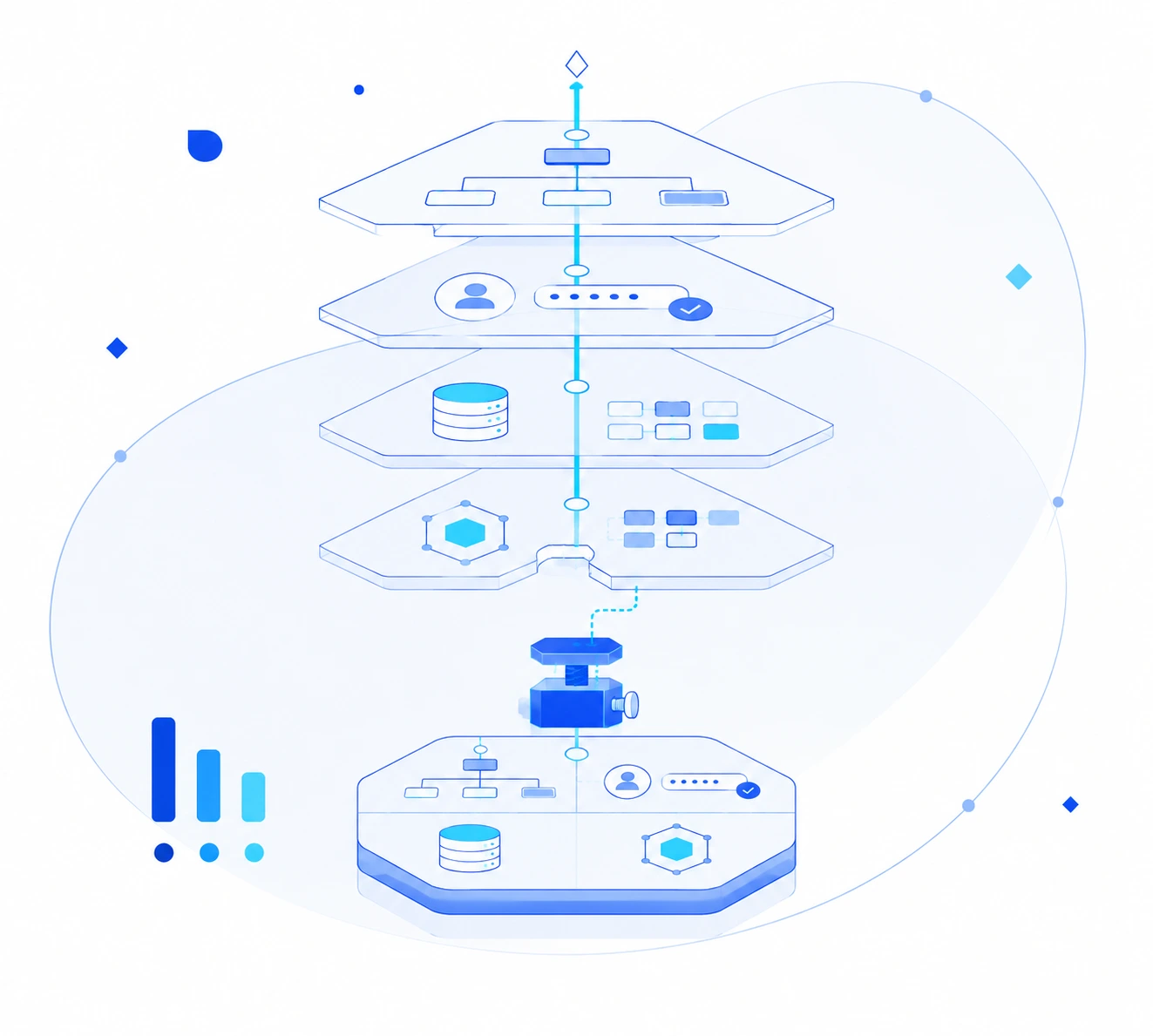
You Should Not Have to Guess Whether the App Is Worth Saving
A working login screen or successful demo does not prove that an application is secure, maintainable or ready for real users. The risks often sit behind the interface: duplicated business logic, weak access controls, unsafe data handling, outdated dependencies, missing tests, fragile deployments and undocumented decisions.

The Original Developer Is Gone
The team has code but no reliable documentation, architecture map, deployment process or clear owner for critical decisions.

The Application Is Almost Ready - But Never Launches
Recurring defects, missing edge cases and unclear priorities keep moving the release date.

Every Change Creates Another Regression
Tightly coupled code, duplicate logic, weak tests or hidden dependencies make even small updates risky.

You Need to Decide: Fix or Rebuild
Stakeholders need evidence about what can be reused, what requires refactoring and what is cheaper to replace.

The App Was Built Quickly With AI
A promising prototype needs review for permissions, data rules, exposed secrets, production configuration and maintainability.

A New Team Is Taking Ownership
An agency, investor or internal engineering team needs a trustworthy handover view before accepting delivery responsibility.
Turn an Unclear Codebase Into an Actionable Technical Decision

Know What You Own
Map the stack, modules, data flows, dependencies, external services, environments and deployment responsibilities.

See the Highest-Risk Problems First
Separate critical production and security risks from medium-term technical debt and cosmetic improvements.
Understand the Cost of Recovery
Translate findings into prioritized work packages with dependencies, effort ranges and acceptance criteria.
Protect the Next Development Phase
Give the incoming team a practical baseline, known constraints and a safer order of operations.

Avoid an Unnecessary Rebuild
Preserve working components when evidence supports repair, while identifying areas that genuinely need replacement.

Move Forward With One Accountable Plan
Continue from audit to stabilization, refactoring, deployment and maintenance under an approved scope.
What We Review
Code Quality and Maintainability
Assess whether the application can be safely understood, changed and supported.
- Project structure and separation of concerns
- Duplicated, dead or overly complex logic
- Error handling, validation and consistency
- Naming, documentation and code ownership
- Test coverage and change-safety gaps
Architecture and Scalability
Review how application components communicate and where design decisions create operational risk.
- Frontend, backend and service boundaries
- Synchronous and asynchronous workflows
- State management and shared dependencies
- Multi-tenant and role architecture
- Scaling constraints and single points of failure

Security Controls and Dependency Risk
Review application-level controls and evidence without presenting the work as a penetration test or certification.
- Authentication, authorization and session handling
- Input validation and sensitive-data exposure
- Secrets committed to code or unsafe configuration
- Dependency vulnerabilities and unsupported packages
- Logging, error disclosure and administrative access
Database, APIs and Integrations
Trace how data is stored, transformed and synchronized across the product.
- Schema quality, relationships and migrations
- Query patterns, indexes and data integrity
- API contracts, validation and error states
- Webhook, retry and background-job behavior
- Third-party dependency and version risk
Performance and Reliability
Identify code and workflow patterns that can create slowdowns, failures or expensive operations.
- Slow queries and repeated network calls
- Frontend rendering and bundle concerns
- Caching and invalidation risks
- Queue, scheduled-task and retry behavior
- Timeout, memory and resource-management issues

Deployment and Operations
Check whether the application can be deployed, monitored and recovered predictably.
- Environment and configuration separation
- Build, release and rollback process
- Container, server and reverse-proxy configuration
- Logging, alerting and health checks
- Backup, restoration and recovery responsibilities

Critical Product Workflows
Validate the business paths that must work before release or handover.
- Registration, login and role permissions
- Payments, subscriptions and entitlements
- Core user and administrator journeys
- Email, files, notifications and scheduled jobs
- Failure, cancellation and recovery states
Recovery Roadmap and Estimate
Convert technical findings into an ordered plan a decision-maker can approve.
- Severity and business-impact ranking
- Immediate containment recommendations
- Repair, refactor, migrate or rebuild decision
- Effort range and dependency map
- Recommended delivery phases and acceptance checks
Have a Web Project in Mind?
Whether you have detailed requirements, an early product idea or an existing application that needs to evolve, start by telling us what you are trying to achieve.
Tell Us
From Findings to a Stable, Maintainable Application
Critical Stabilization
Contain production-impacting failures first.
- Resolve critical authentication, data or workflow failures
- Rotate exposed secrets and correct unsafe configuration
- Restore failed deployments and background jobs
- Add temporary monitoring and rollback safeguards
Structured Bug-Fixing Sprint
Repair prioritized defects under clear acceptance criteria.
- Reproduce and group related failures
- Fix root causes rather than visible symptoms
- Add regression checks for repaired workflows
- Deploy through an approved release plan
Refactoring and Technical-Debt Reduction
Improve change safety in the areas that create the most delivery risk.
- Separate tightly coupled modules
- Remove duplicate or abandoned logic
- Modernize dependencies and unsupported versions
- Improve validation, errors and testability
Deployment and Handover Recovery
Make the application operable by the owner or incoming team.
- Document environments and release steps
- Create repository and branch conventions
- Define backups, logs and monitoring ownership
- Deliver an architecture and operational handover
Audit and recovery process
01
Define the decision
Confirm why the audit is needed: launch, handover, incident recovery, modernization, acquisition support or a fix-versus-rebuild decision.
02
Qualify the codebase
Identify repositories, stacks, modules, environments, user roles, external services and business-critical workflows.
03

Establish secure access
Use approved repository and access methods; avoid sending secrets or production data through public channels.
04
Review automated evidence
Collect dependency, secret, code-quality, configuration and repository-history signals where appropriate.
05
Perform manual technical review
Trace architecture, workflows, permissions, data movement, deployment behavior and change-safety concerns.
06
Validate material findings
Reproduce or substantiate high-priority issues and distinguish confirmed evidence from assumptions or unavailable areas.
07

Deliver the audit pack
Present the executive summary, risk register, detailed findings, recovery options, estimate and recommended order of work.
08
Approve recovery milestones
If requested, convert the roadmap into a separate implementation scope with acceptance checks and controlled releases.
Why iTechOza
9+ Years Across Real Production Stacks
Our team works across MERN, Laravel, PHP, WordPress, WooCommerce, APIs, databases and cloud deployments, so the audit follows the complete workflow rather than one code layer.
Findings Written for Decisions
Technical evidence is translated into risk, priority, dependency and effort so founders and managers can act without decoding a scanner report.
Recovery Capability After the Audit
The same team can implement approved repairs, refactoring, migration, deployment and maintenance without forcing the client to restart discovery.
No Automatic Rebuild Recommendation
We preserve usable code and recommend replacement only where evidence shows that continued patching creates greater cost or risk.
Secure Access and Controlled Changes
Repositories, environments and production changes are handled through approved access, change and rollback procedures.
Clear Scope and Accountability
The audit boundary, unavailable evidence, assumptions and follow-on work are stated clearly before the client approves implementation.