AI API & MODEL INTEGRATION

AI API and Model Integration for SaaS, Web and Mobile Applications

Integrate capable AI models into your existing product without creating an unmaintainable providerspecific shortcut. iTechOza builds secure AI API integrations for SaaS, web and mobile applications using OpenAI, Google Gemini and other suitable commercial or open-source model options.

We handle the complete integration layer: use-case design, provider evaluation, prompts and structured outputs, authentication, context, retrieval, tool calls, retries, fallbacks, usage limits, cost monitoring, evaluation and product experience.
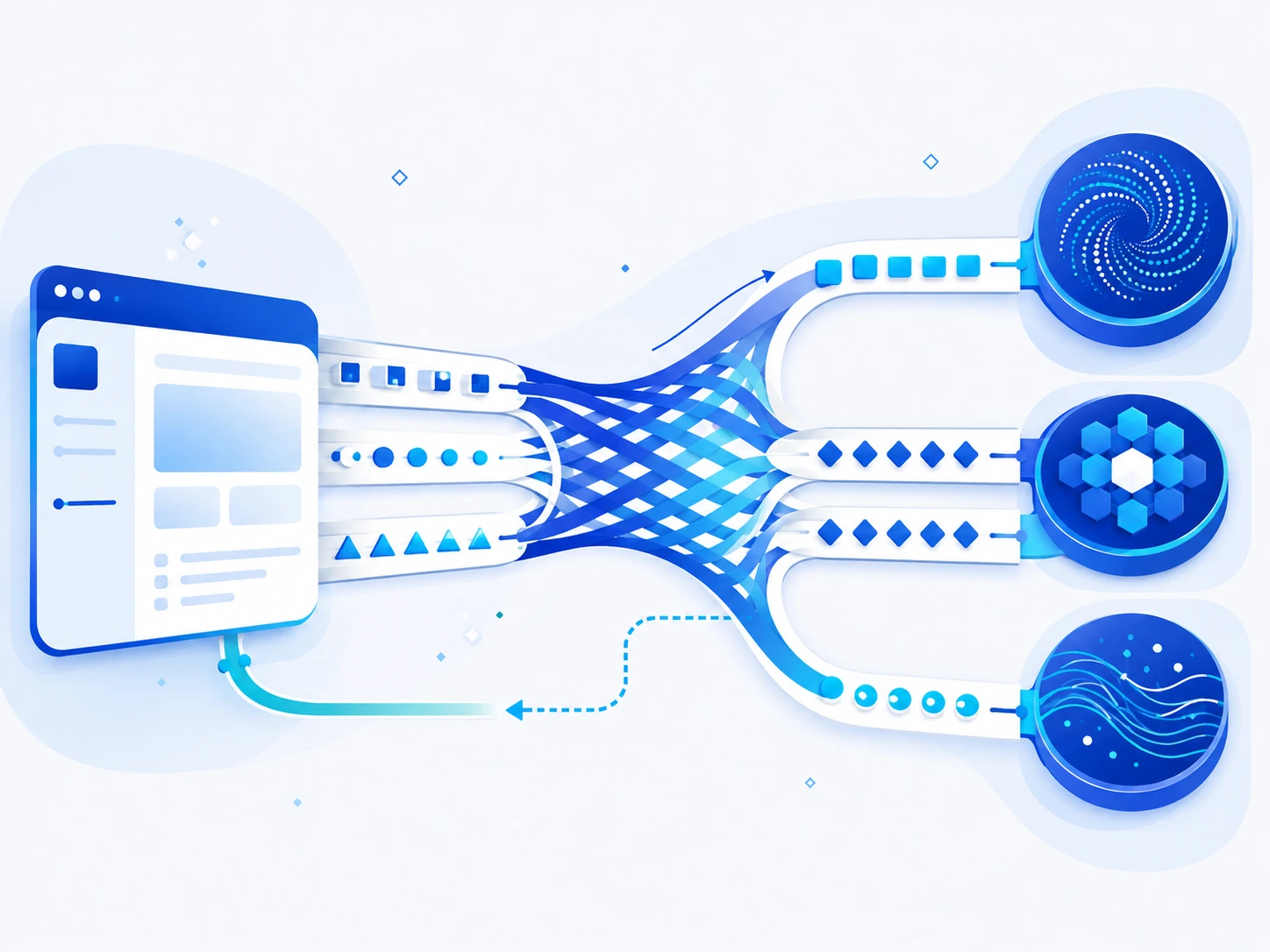
Provider-appropriate, model-agnostic design Secure server-side integration Usage, latency and cost controls Evaluation and fallback behaviour
AI API Integration Services
Best-fit use cases

Who This Service Is For

AI API & Model Integration is most valuable when the business has a defined product opportunity, workflow problem or production challenge and needs a team that can connect specialist AI work with secure application engineering. Typical buyers include:

Product Teams

01

adding one or more AI providers to a web, mobile or SaaS application.

Engineering teams

02

replacing direct client-side model calls with secure backend integration.

Businesses

03

migrating providers, adding fallback or controlling cost and reliability.

Teams

04

integrating speech, vision, embeddings, moderation or generative models into an existing workflow.

Have an AI integration in mind? We can assess how AI APIs can fit into your existing systems, workflows, and data while ensuring reliable performance, security, and maintainability.
Discuss Your AI Integration

Calling a Model API Is Easy; Operating It Reliably Is the Real Work

A direct API call may expose keys, ignore user permissions, create unpredictable costs or fail when the provider returns a timeout, rate limit or unexpected format. Model behaviour can also change as
versions and capabilities evolve.

We place the model behind a controlled application service with validation, observability and flexible boundaries, then integrate it into the user journey and data rules of your product.

AI Integration Services We Provide

OpenAI and Gemini Integration

OpenAI and Gemini Integration

Implement supported text, image, audio, structured-output, embedding or tool capabilities around a defined product use case.

Provider and Model Evaluation

Provider and Model Evaluation

Compare models using representative inputs, quality, latency, cost, privacy, availability and integration requirements.

Prompt and Context Architecture

Prompt and Context Architecture

Manage system instructions, templates, user context, structured output and versioning in maintainable application code.

Retrieval and Embeddings

Retrieval and Embeddings

Connect approved content, vector search, metadata and reranking when the application needs grounded knowledge.

Tool and Function Integration

Tool and Function Integration

Allow controlled model workflows to call approved APIs or application functions with validation and permission checks.

Integration Recovery and Optimization

Integration Recovery and Optimization

Fix exposed keys, brittle prompts, unvalidated outputs, excessive cost, provider coupling, poor retries and weak observability.

AI API Integration Use Cases

Chat and Assistance Features

Chat and Assistance Features

Add contextual conversational help to websites, SaaS applications or internal tools.

Structured Extraction and Classification

Structured Extraction and Classification

Turn text, images or documents into validated fields and workflow categories.

Content and Report Workflows

Content and Report Workflows

Generate, summarize or transform content within templates, review steps and permission boundaries.

Semantic Search and Knowledge

Semantic Search and Knowledge

Create embedding-based retrieval and cited answers across approved information.

AI Agents and Tool Use

AI Agents and Tool Use

Connect models to bounded application actions with confirmation, auditability and error handling.

Multimodal Product Features

Multimodal Product Features

Use supported text, image, audio or file inputs inside a designed product experience.

Industry and Product Applications

The technical pattern should be adapted to the industry's data, workflow, risk and operating environment. Relevant applications can include:

SaaS

SaaS

Integrate model capability with authentication, tenant data, plans, usage limits and administration

Content Products

Content Products

Add structured generation, transformation, moderation or media workflows with validation.

Support Platforms

Support Platforms

Use classification, summarization, retrieval and drafting inside existing case workflows.

Mobile Applications

Mobile Applications

Provide AI features through a secure backend rather than exposing provider secrets in the app.

Developer Tools

Developer Tools

Offer model-powered analysis or generation through versioned services and predictable output contracts.

Have a Web Project in Mind?

Whether you have detailed requirements, an early product idea or an existing application that needs to evolve, start by telling us what you are trying to achieve.
Tell Us

How We Integrate an AI Model Safely

01

Use-Case and Data Review

Define the user task, information boundaries, output format, quality target and prohibited behaviour.

02

Provider and Model Tests

Evaluate suitable models using representative inputs and current provider documentation.

03

Integration Architecture

Design server-side services, context, secrets, permissions, schemas, storage, queues, fallbacks and version controls.

04

Prototype and Evaluation

Test quality, structured output, errors, latency, rate limits and expected operating cost.

05

Product Integration
Product Integration

Build the API layer, user interface, analytics, metering, administration and deployment.

06

Monitoring and Change Management

Track usage, failures, latency, cost and quality; review model or API updates before production changes.

Technical Architecture and Delivery Considerations

The final architecture depends on the product, data, volume, security and integration requirements. A
production implementation will normally consider the following layers:

Server-Side Integration Layer

Server-Side Integration Layer

Keep credentials, provider logic, policies and request validation away from untrusted clients.

Provider Adapter

Provider Adapter

Normalize request, response, error and usage handling so model changes remain maintainable.

Prompt and Schema Management

Prompt and Schema Management

Version instructions and validate outputs before application code uses them.

Resilience and Cost Controls

Resilience and Cost Controls

Apply timeouts, retries, caching, rate limits, quotas, routing and fallback where justified.

Observability and Evaluation

Observability and Evaluation

Track latency, errors, model versions, token or media usage, quality and user feedback.

Ready to Build the Right Solution?

Whether you need a new application, additional functionality or support for an existing product, we can help you plan the right development path for your goals.

Contact Us

Expected Project Deliverables

The exact deliverables depend on the selected engagement, but a complete scope can include.

01

AI integration requirements and provider comparison

Detailed analysis of integration needs, plus a structured comparison of AI providers to inform the best-fit selection.

02

Secure server-side API service

Production-grade API service with robust authentication, authorization, and data protection for all server-side operations.

03

Prompt, context and structured-output design

Carefully engineered prompts, context-management strategies, and structured-output schemas for reliable AI responses.

04

Retrieval, embedding or tool integration where required

Seamless integration of retrieval-augmented generation, embedding pipelines, or external tools to extend AI capabilities.

05

Retry, rate-limit, timeout and fallback handling

Robust error-handling logic including retries, rate-limiting, timeout management, and graceful fallback mechanisms.

06

Usage metering, budgets and operational alerts

Real-time usage tracking, configurable budget controls, and proactive operational alerts to manage costs and performance.

07

Evaluation cases and regression checks

Comprehensive test suites and evaluation cases, plus automated regression checks to ensure ongoing quality and reliability.

08

Technical documentation and provider-change plan

Complete technical documentation covering architecture and operations, plus a clear plan for switching AI providers when needed.

Production resilience by design

Keep the Product Stable as Models and APIs Change

AI providers update models, limits, pricing and behaviour. We isolate provider-specific details, preserve versioned evaluation and design the application so changes can be reviewed rather than silently affecting users.

πŸ›‘
Secure API Integration Keep provider secrets on the server and prevent credentials from being exposed in client-side code.
βœ“
Validated Interfaces Validate model inputs and outputs against defined schemas before data reaches downstream workflows.
≑
Resilience Controls Handle rate limits, retries, timeouts and fallbacks so temporary provider issues do not disrupt the product.
↻
Usage & Regression Control Track per-user or per-tenant usage and evaluate provider or model changes before they reach production.
βœ“
Stable AI Product Secure integration + validation + resilience + usage control + regression testing
AI product stability is a continuous engineering loop Review provider changes, validate behaviour, control usage and continuously protect the production experience.
01 Isolate
β†’
02 Validate
β†’
03 Test
β†’
04 Release

How Project Success Can Be Measured

Success measures should be agreed during discovery and tied to the intended user outcome. Appropriate measures may include:

Successful request rate

Successful request rate

Valid user tasks complete without provider, parsing, timeout or application errors.

Output validity

Output validity

Responses meet the required schema and business rules before downstream use.

Latency

Latency

End-to-end response time supports the product experience across realistic payload sizes.

Cost per task

Cost per task

Provider usage is attributed to the feature, customer or plan and compared with successful outcomes.

Change resilience

Change resilience

Provider and model updates can be evaluated, released and rolled back without widespread application changes.

Have a Web Project in Mind?

Tell Us

Flexible Engagement Options

AI Integration Assessment

Best for selecting a provider, reviewing architecture and defining realistic quality and cost.

Focused API Integration

Best for one defined feature added to an existing application.

AI Integration Platform

Best for multiple models or features with routing, usage control, evaluation and administration.

AI Integration Backed by Full-Stack and API Engineering

iTechOza’s experience with SaaS, web, mobile, backend and third-party APIs allows the model to be integrated as one dependable service within the broader application architecture.

We recommend providers according to the use case and keep OpenAI, Google AI Studio and prompt engineering as capabilitiesβ€”not isolated thin pages that compete with the main integration service.

Frequently Asked Questions About AI API & Model Integration

We can work with suitable commercial and open-source options, including OpenAI and Google Gemini,
subject to current APIs, access, region, capability and project requirements.

Integrate the Right Model Without Locking the Product to a Shortcut

Tell us what the feature should do, how your application is built and what data it may use. We will recommend a secure integration architecture and a measurable implementation plan.

Discuss Your AI Integration