Intelligent Document Processing for Accurate, Reviewable Business Workflows
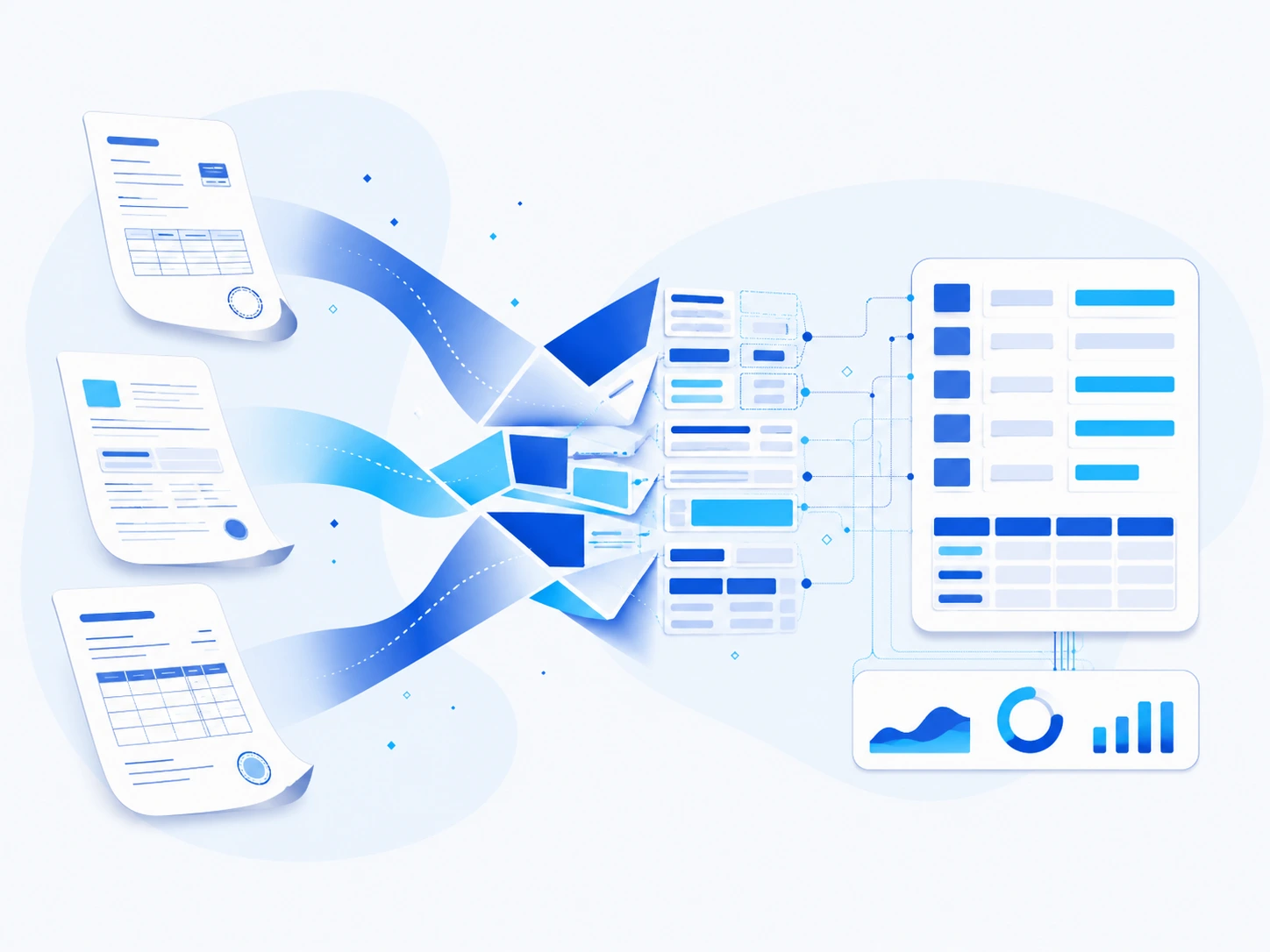
Reduce the manual effort required to read, classify and process business documents. iTechOza combines OCR, computer vision, NLP, machine learning, generative AI and validation rules to turn PDFs, images, forms, invoices and records into structured, actionable data.
We build complete document workflows with confidence scoring, business-rule validation, exception queues, human review, audit history and integration into CRM, ERP, databases, storage and custom applications.
Document Intelligence Solutions We Build

Document Classification
Identify document type, category, priority or workflow path before applying the relevant extraction and validation rules.

OCR and Field Extraction
Extract printed or supported handwritten text, key-value pairs, identifiers, tables and layout-aware fields.

Document Understanding
Use language and vision models to identify entities, clauses, context and relationships that simple templates cannot capture.

Validation and Confidence Scoring
Check formats, cross-field logic, reference data and confidence before accepting or routing a value.

Human Review and Exception Queues
Give authorized users the source view, extracted output, confidence and correction controls needed to resolve uncertain cases.

Document Workflow Integration
Move approved data and files into CRM, ERP, databases, case systems, storage, notifications and downstream processes.
Document Processing Use Cases
Invoices and Purchase Documents
Extract supplier, line-item, tax, total and reference information, then validate and route for approval.
Applications and Onboarding Forms
Classify submissions, capture required fields, identify missing information and create structured records.
Contracts and Business Records
Locate clauses, dates, parties, obligations and selected terms for authorized review workflows.
Claims and Case Documents
Organize incoming evidence, extract relevant information and prepare review queues without making uncontrolled decisions.

Logistics and Operational Documents
Read labels, delivery records, manifests, receipts and identifiers to support tracking and reconciliation.

Legacy Archive Digitization
Convert scanned document collections into searchable text, metadata and structured indexes with quality sampling.
Industry and Product Applications
The technical pattern should be adapted to the industry's data, workflow, risk and operating environment. Relevant applications can include:

Finance Operations
Extract and validate invoices, statements, expense records and supporting documents.

Insurance
Process application, claim and evidence documents with controlled review and audit history.
Healthcare Administration
Support carefully governed forms and records workflows with sensitive-data controls.
Logistics
Read shipment, customs, delivery and supplier documents and connect results to operational systems.

SaaS Platforms
Offer document intake, extraction and review as a product capability for customer workflows.
How We Automate a Document Workflow
01
Document and Outcome Discovery
Define document types, sources, volume, variations, required fields, downstream actions and error consequences.
02
Representative Sample Review
Assess scan quality, layouts, languages, handwriting, tables, sensitive information and edge cases.
03
Extraction and Validation Prototype
Compare OCR, layout, vision, NLP and model approaches against a labelled sample and business rules.
04
Review Workflow Design
Set confidence thresholds, exception reasons, user permissions, correction capture and audit requirements.
05
Integration and Production Build
Implement intake, processing, storage, API connections, notifications, monitoring and administration.
06

Quality Monitoring and Expansion
Track field-level accuracy, exception rates, document changes and reviewer corrections before adding new types.
Technical Architecture and Delivery Considerations
The final architecture depends on the product, data, volume, security and integration requirements. A production implementation will normally consider the following layers:

Secure Intake
Receive uploads, email attachments, scans or API submissions with file validation and tracking.
OCR and Layout Understanding
Extract text, tables, key-value relationships and visual structure across supported formats.
Classification and Extraction
Identify document type and map required information into a controlled schema.
Validation and Human Review
Apply confidence, business rules and external lookups before routing exceptions to a reviewer.

Export and Audit
Write approved data to downstream systems while preserving source, version, corrections and status.
How Project Success Can Be Measured
Success measures should be agreed during discovery and tied to the intended user outcome. Appropriate measures may include:
Field-level accuracy
Measure exact extraction quality for each important field rather than one document-level average.

Straight-through processing
Track the proportion of documents safely completed without manual intervention.
Review time
Measure how quickly a reviewer resolves exceptions with highlighted source evidence.
Validation failure rate
Expose missing, inconsistent, duplicate or out-of-policy values before export
Processing turnaround
Monitor intake-to-approved-data time across document types and channels.
Flexible Engagement Options
Document Workflow Assessment
Best for reviewing samples, field requirements, volume, integrations and expected exception handling.
IDP Proof of Concept
Best for measuring extraction and validation on representative document types before full automation.
Production Document Platform
Best for complete intake, processing, review, integration, reporting and ongoing expansion.