RAG Development Services for Trusted Enterprise Knowledge Assistants
Give employees and customers useful answers grounded in the information your organization trusts. iTechOza builds retrieval-augmented generation systems that connect AI models with approved documents, databases, product information, policies and APIs.
We design the full knowledge lifecycle: ingestion, parsing, chunking, metadata, access control, retrieval, reranking, citations, evaluation, content freshness, user feedback and integration into a secure web, SaaS or internal application.
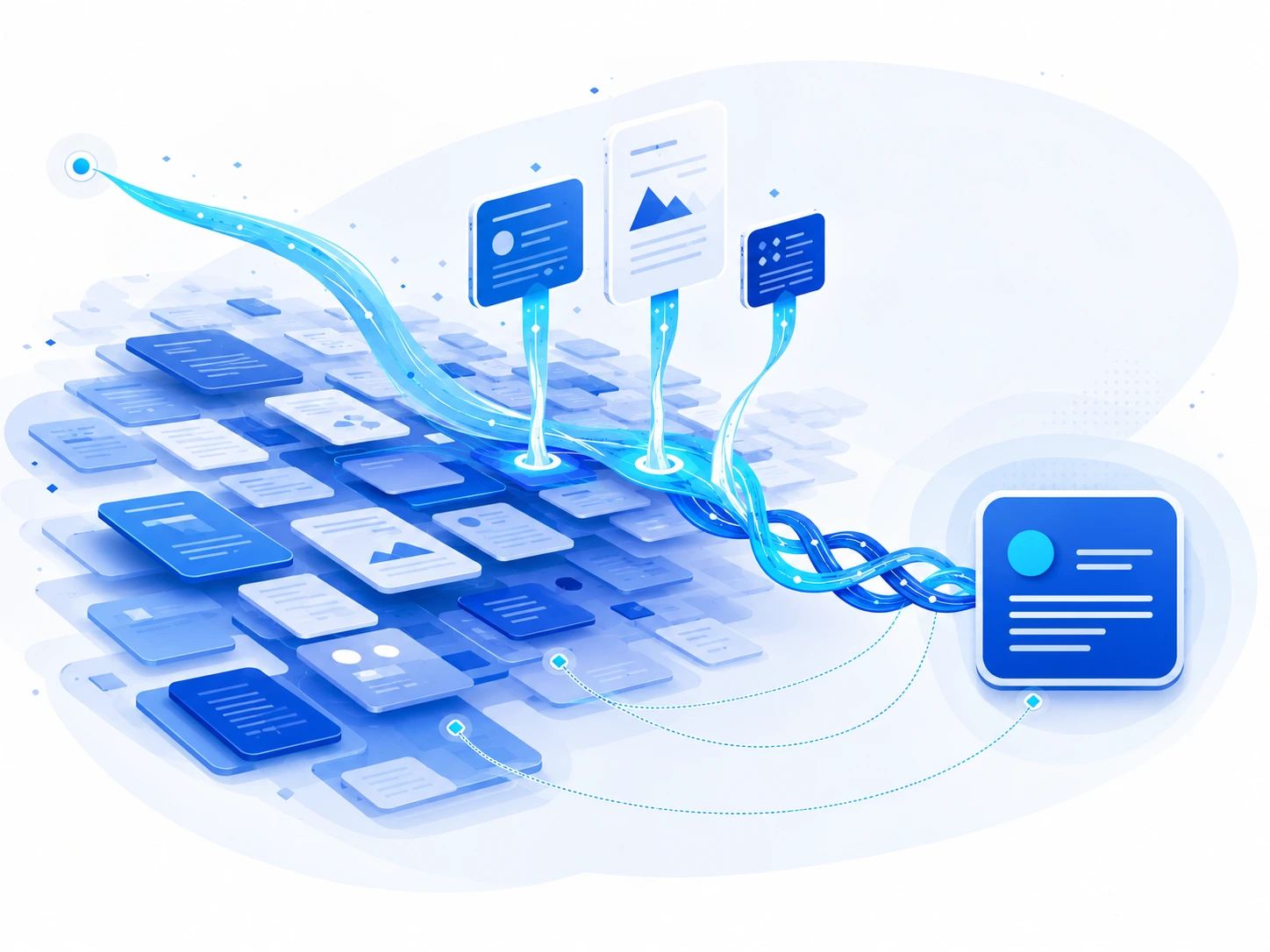
RAG and Knowledge Solutions We Build

Enterprise Knowledge Assistants
Search and answer across policies, procedures, technical documentation, product information and approved internal knowledge.

Customer Knowledge Experiences
Provide grounded product, service or support answers using public and customer-authorized sources.

Hybrid Search and Retrieval
Combine keyword, vector, metadata, filters and reranking to improve relevance across varied queries.

Document and Data Connectors
Ingest files, content systems, databases and APIs with update, deletion and permission behaviour defined.

Citations and Evidence Workflows
Show supporting passages or source links and preserve traceability for review.

RAG Evaluation and Improvement
Measure retrieval and answer quality, analyze failures and improve content, chunking, ranking, prompts and user experience.
Knowledge Assistant Use Cases
Employee Policy and Process Search
Help staff find current procedures, forms, requirements and next steps without browsing disconnected repositories.

Technical and Product Support
Retrieve troubleshooting guidance, specifications, release information and relevant knowledge for users or agents.
Sales and Proposal Support
Find approved service, product, case-study and capability information while respecting source boundaries.

Research and Document Comparison
Locate related passages, summarize evidence and compare approved documents with citations.

Customer Self-Service
Answer eligible questions from public or account-authorized knowledge and escalate unsupported cases.
Knowledge Discovery Inside SaaS
Add contextual search and assistance within a product using user roles, workspace data and product permissions.
Industry and Product Applications
The technical pattern should be adapted to the industry's data, workflow, risk and operating environment.

SaaS
Provide product and account-aware knowledge assistance within role and tenant boundaries.
Professional Services
Search and compare approved methods, precedents, templates and project knowledge with citations.
Customer Support
Help agents and customers locate policy and troubleshooting information from governed sources.
Manufacturing
Retrieve procedures, manuals, specifications and service information by equipment or context.

Internal Knowledge
Unify discovery across policies, wikis, drives and operational systems without flattening permissions.
How We Build and Evaluate a RAG System
01

Knowledge and Audience Definition
Identify users, questions, source owners, permissions, freshness needs and unsupported topics.
02
Content and Connector Audit
Review formats, structure, duplicates, quality, metadata, access control and update behaviour.
03
Retrieval Prototype
Test parsing, chunking, embeddings, keyword search, filters and reranking against representative questions.
04

Answer and Citation Design
Define how context is presented to the model, how evidence is shown and how insufficient support is handled.
05
Application and Integration
Build the interface, authentication, connectors, administration, analytics, feedback and human escalation.
06
Evaluation and Content Operations
Measure retrieval and answer quality, monitor failed queries and establish a repeatable content-refresh workflow.
Technical Architecture and Delivery Considerations
The final architecture depends on the product, data, volume, security and integration requirements. A
production implementation will normally consider the following layers.
Content Connectors
Ingest approved files, pages, databases and business systems with source metadata and permissions.
Parsing and Indexing
Extract structure, clean content, chunk appropriately and create searchable keyword and vector representations.
Hybrid Retrieval
Combine filters, keyword, semantic ranking and reranking according to the query and domain.
Answer and Citation Layer
Generate or assemble a response from retrieved evidence while exposing sources and uncertainty.
Freshness and Evaluation
Synchronize changes, test retrieval and monitor unanswered, unsupported or permission-sensitive queries.
How Project Success Can Be Measured
Success measures should be agreed during discovery and tied to the intended user outcome.
Retrieval relevance
The required evidence appears within the top results for representative questions.
Answer support
Material claims can be traced to sources the user is authorized to access.
Freshness
Updates and deletions become searchable within the agreed synchronization window.
Permission isolation
Users cannot retrieve or infer content outside their role, tenant or document access.
Search success
Users find the needed information with fewer reformulations and less manual browsing.
Workflow Automation
Automating routine processes reduces manual errors and accelerates execution. Our workflow automation solutions help you streamline operations and improve productivity.
Flexible Engagement Options
Knowledge and RAG Readiness Audit
Best for evaluating content quality, permissions, connectors and high-value user questions.
RAG Proof of Concept
Best for testing retrieval and answer quality across a representative knowledge set.
Production Knowledge Assistant
Best for complete ingestion, retrieval, interface, security, evaluation and content operations.